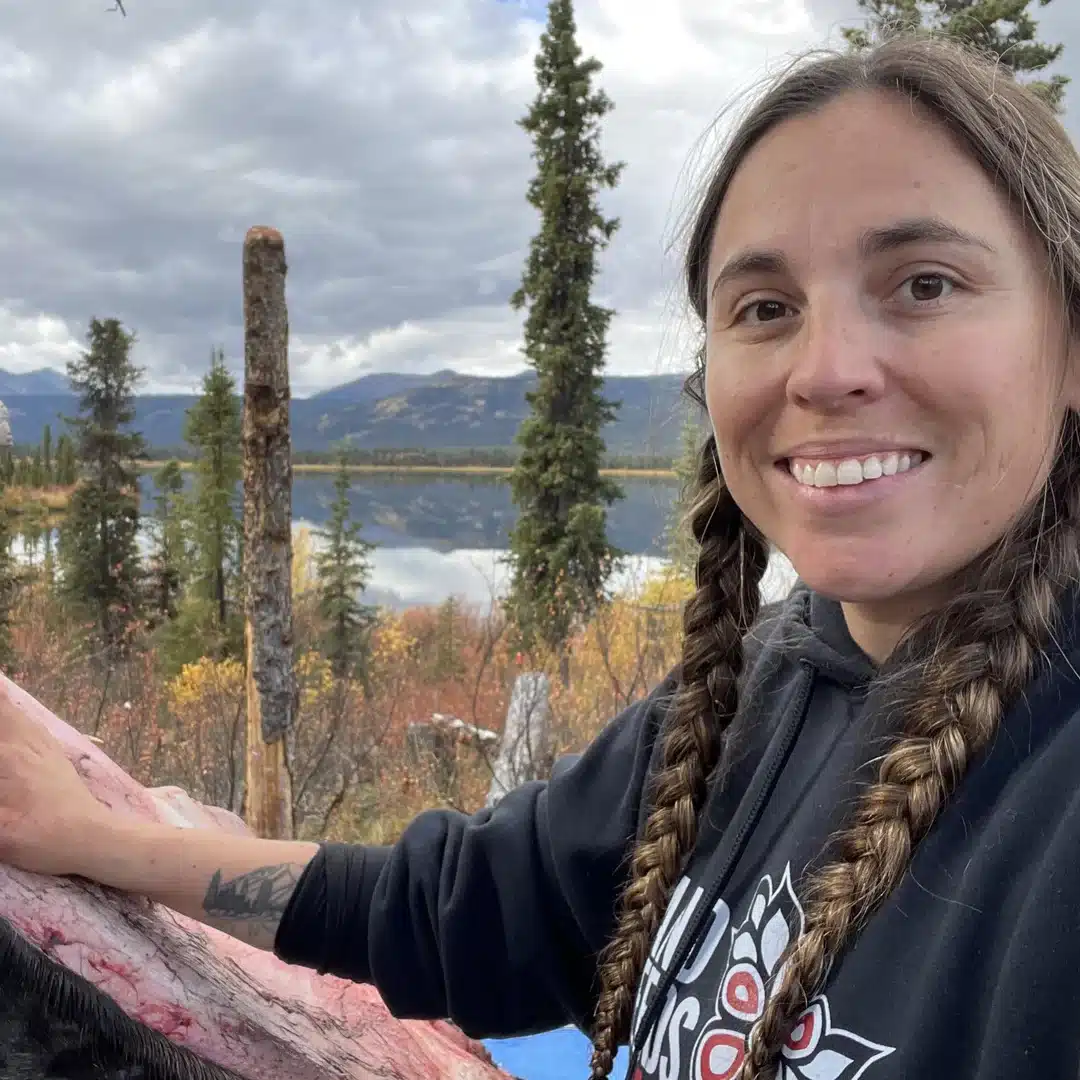
Gillian Staveley had an unusual childhood. She grew up trailing her biologist parents through the Yukon’s wetlands, forests, and tundra, studying caribou. As their only child, she went where they went.
“I got to spend a lot of time on the land in different parts of the Yukon, when my parents were doing fieldwork and research, which was wonderful. It definitely guided me into the work I’m doing now.”
Gillian is from Liard First Nation, one of the five communities that make up Kaska Dena Nation. The traditional territory of the Kaska spans northern British Columbia, southeast Yukon, and parts of the Northwest Territories. Gillian has devoted most of her career to Kaska-led stewardship and cultural resurgence projects.
“Because of how I was raised, I have been very lucky to see first-hand what happens when Indigenous nations have the opportunity to lead decisions about their own futures. It can be very powerful and supports so many different things.”
After a decade with the Kaska Dena Council and then the Dena Kayeh Institute, where she helped advance Dene K’éh Kusān—Kaska’s proposed Indigenous Protected and Conserved Area (IPCA)—Gillian joined MakeWay in 2025 as the first Program Lead for the Yukon. This role has allowed her to continue supporting Indigenous self-determination, community-defined solutions, and land and water stewardship.
“I feel very lucky to get to say I get to do that work and now get to do it in a different way with the MakeWay hat on.”
We sat down with Gillian to learn about the territory’s Indigenous leadership and community priorities, the opportunities and challenges she has observed across the North, and philanthropy in the Yukon.
The Yukon’s Strong Governance and Collaboration
Since joining MakeWay’s Northern Program—which works across the Yukon, Northwest Territories, and Nunavut, as well as in the Inuvialuit, Nunavik, and Nunatsiavut regions—Gillian has had the opportunity to appreciate both the diversity of the North and trends across the region.
“The North is very diverse in its histories and experiences, and I’ve gotten to learn from colleagues in the Northern Program just how unique each of us and our settings are, which is beautiful.”
Gillian takes pride in the Yukon’s rich history of self-governance and modern treaties. Eleven of the 14 Yukon First Nations signed onto self-government agreements with the Government of Canada between 1993-2005.
“There’s a long, beautiful history in the Yukon around how our nations came together to start to exercise our jurisdiction,” she explains. “That has created some pretty incredible governance institutions in each of the communities, which has created opportunities for really strong government-to-government relationships.”
Kaska Dena, however, is one of three that decided not to sign onto an agreement—a decision that Gillian says is “something we are really proud of.”
“While nations are celebrating the strength that they have through a modern treaty—and I commend them for that because they do have a lot of incredible things happening for their nations and communities—equally, we have been very proud of the decisions our Elders made so that we could thrive in the way we want to into the future.”
Despite different governance paths, Yukon First Nations often work collaboratively to push forward shared priorities.
“Because each of us sees the strength in what we’re doing, it allows us to collectively move forward in a powerful way together and you see that in the way decisions have been made in the Yukon—there is a lot of strength in our Indigenous governments.”
Indigenous Nations Leading the Way
This community strength unfolds against a backdrop unlike almost anywhere else on Earth. The Yukon’s lands and waters are globally significant. This is a territory of epic landscapes and intact ecosystems, and where forests and permafrost lock away massive amounts of carbon.
“That’s something we’re really proud to be able to showcase—the intact corridors for wildlife, the climate resilience that is here, the biodiversity that is here,” says Gillian. “That’s something that we want to keep here and why we are working so hard to make sure that happens.”
Protecting the Yukon’s ecosystems is a priority that is held alongside economic and resource development.
“We experience the same pressures as the rest of the North. For example, there is a big push for critical minerals and infrastructure development.”
The Kaska understand that it’s not about one or the other—the environment or the economy—but rather about supporting healthy ecosystems that can support healthy people and cultures, while creating jobs and economic development opportunities.
“Our economies have changed and are changing, so we’re always looking for ways to approach that conversation in a very collaborative and balanced way,” comments Gillian.
First Nations are leading these conversations—not just participating in them: “We’ve really pushed hard to make sure decisions around mining and resource development are made with First Nations not just sitting at the table but leading the discussions as well.”
Long-term Funding for Long-term Responsibilities
Looking across the North, one of the obvious shared challenges is climate change. Northern Canada and the Arctic are warming nearly four times as fast as the global average.
“Communities in the North are experiencing huge change to their environments compared to people in southern Canada,” says Gillian. “Wildfires and floods are having tremendous impacts on our waters, permafrost, and our wildlife. Our traditional lands are changing much faster than other places.”
Since joining the Northern Program and gaining more insight into the work that communities are leading in other parts of the North, Gillian has observed that—despite the North’s vast geography and diversity—many communities are responding to the challenges that climate change creates with a similar approach.
“One of the biggest ways they are doing that is through long-term approaches to how they are going to combat the changes that are going to keep happening.”
But, she explains, it’s not always easy to find the funding that reflects the long-term nature of this work: “Often Indigenous Nations are burdened with administering short-term projects that don’t really match their long-term responsibilities to the land.”
“Historically, much of the funding Nations receive is very project based, short-term, externally driven. It doesn’t feel very strategic because we can’t plan and build lasting abilities to make sure we are able to do this work long term.”
Other regions, like Nunavut and the Northwest Territories, have been successful in securing long-term, flexible funding using the Project Finance for Permanence model and offer a source of inspiration.
“We’re trying to find long-term ways to try to deal with that and build conservation economies that are generational and can create meaningful employment for our youth into the future while also strengthening culture and stewardship.”
“I feel like I’m not alone”
Over the past year, Gillian has been helping bring together Yukon First Nations to explore potential funding models and engage government and philanthropic funders that may be interested in supporting community-led work in the territory.
She credits her colleagues on the Northern Team for helping her play this role thoughtfully.
“Even in our role at MakeWay, often as a convenor in spaces trying to navigate those challenges and support the Nations we work with, it’s great to be able to learn from my colleagues how to do that in a good way.”
Her teammates in the Northern Program have also been a source of comfort, hope, and encouragement.
“There are a lot of trends across the North, both opportunities and challenges, and the more I engage with my colleagues across the North, the more I feel like I’m not alone because there is so much that we can do to learn from each other.”
The Yukon provides a lot to take inspiration from—whether it be the strength of its Indigenous governance, Kaska Dena’s stewardship ethic, or the long-term philosophy that guides much of the work. And not just for other northern communities, but for all communities wanting to live in balance and plant the seeds that will allow future generations to be well.
Now, Gillian shares, it’s about getting the resources and support to flow in the direction of that change.
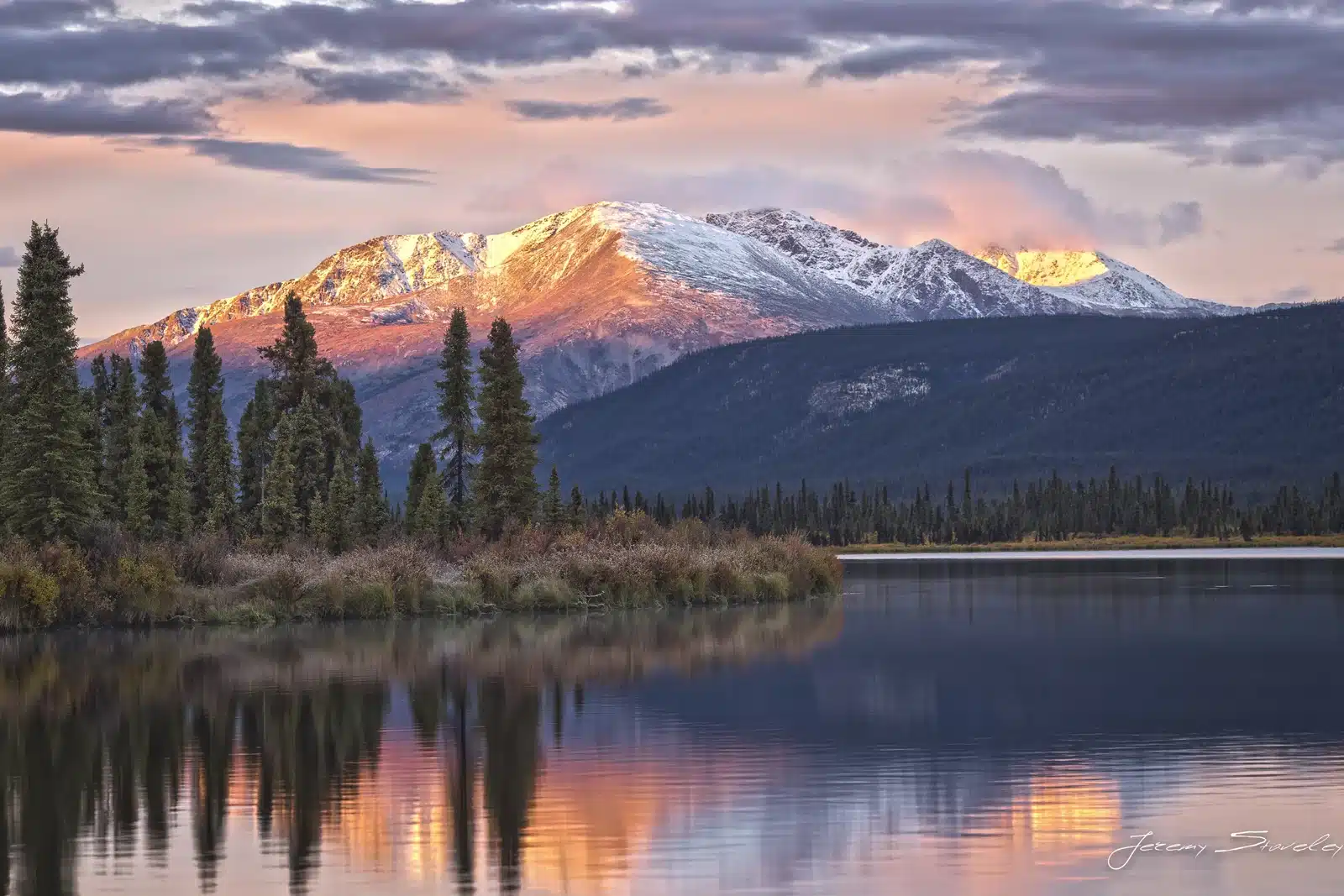
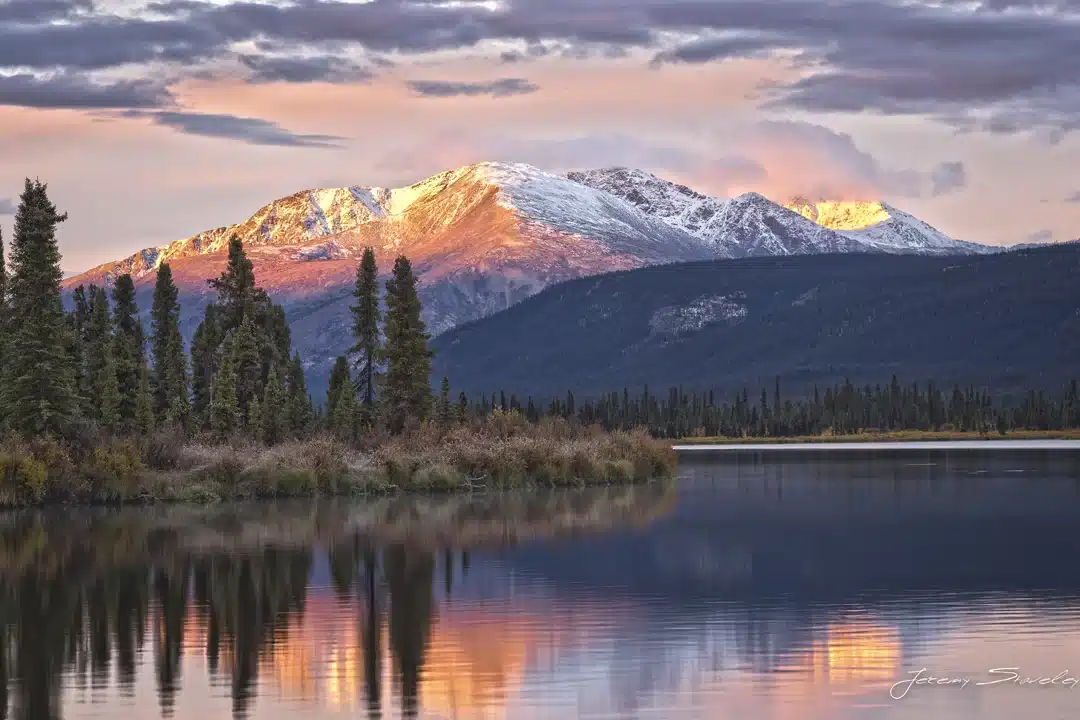
Cover Image: Moose Lake, Southern Yukon, by Jeremy Staveley.