All throughout kisiskâciwan (a Cree word meaning “swift flowing river” – also known as Saskatchewan), Indigenous communities are leading transformative, and often life-changing, initiatives: from strengthening food security and sovereignty in remote regions; to building spaces that support deeper, more holistic healing; to starting innovative projects that cultivate cultural sharing, learning, and renewal.
Last summer, the Sîhtoskâtowin Program brought community partners doing this work across Saskatchewan together for an annual gathering. The program aims to bring more accessible philanthropic funding to rural and remote Indigenous-led initiatives in the province, while intentionally creating opportunities for initiatives to grow stronger relationships with one another, share knowledge and resources, and receive much needed rest and affirmation “Bringing people together ignites and restores kinship to one another” says Sîhtoskâtowin Program Specialist, Taylar Belanger, “Kinship teaches us to be connected to one another in a good way, and in return, feel supported from all corners of Turtle Island.”
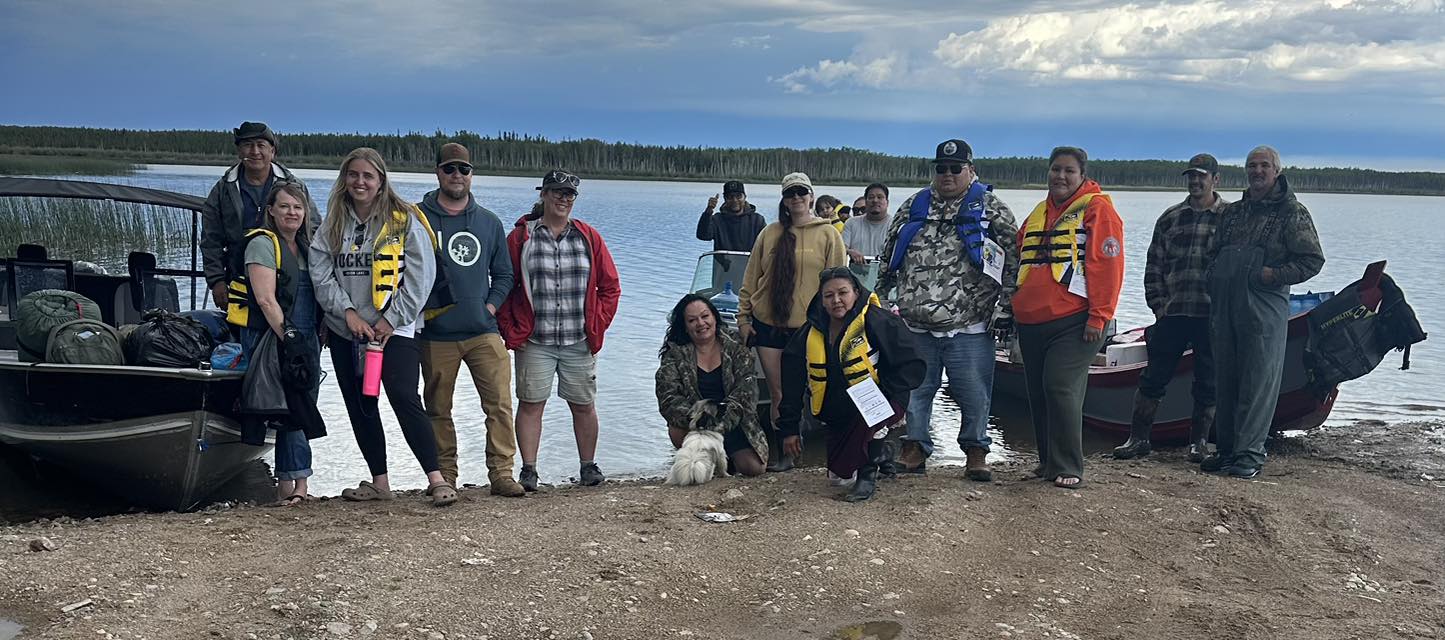
When partners arrived at Turnor Lake & Birch Narrows “Home Away from Home Camp” at Frobisher Lake, they were warmly welcomed by Rebecca Sylvestre, creator of the camp and Director of the Turnor Lake Birch Narrows Community Food Centre (CFC). Like many in attendance, Rebecca has dedicated countless hours to building sustainable foodways in her community. The CFC she runs is the first of its kind in Saskatchewan, and one of four Indigenous food centres in all of Canada. Their programming not only strengthens food access and security, but also preserves place-based food knowledge through community gardens, food preparation workshops, and land-based Youth programs.
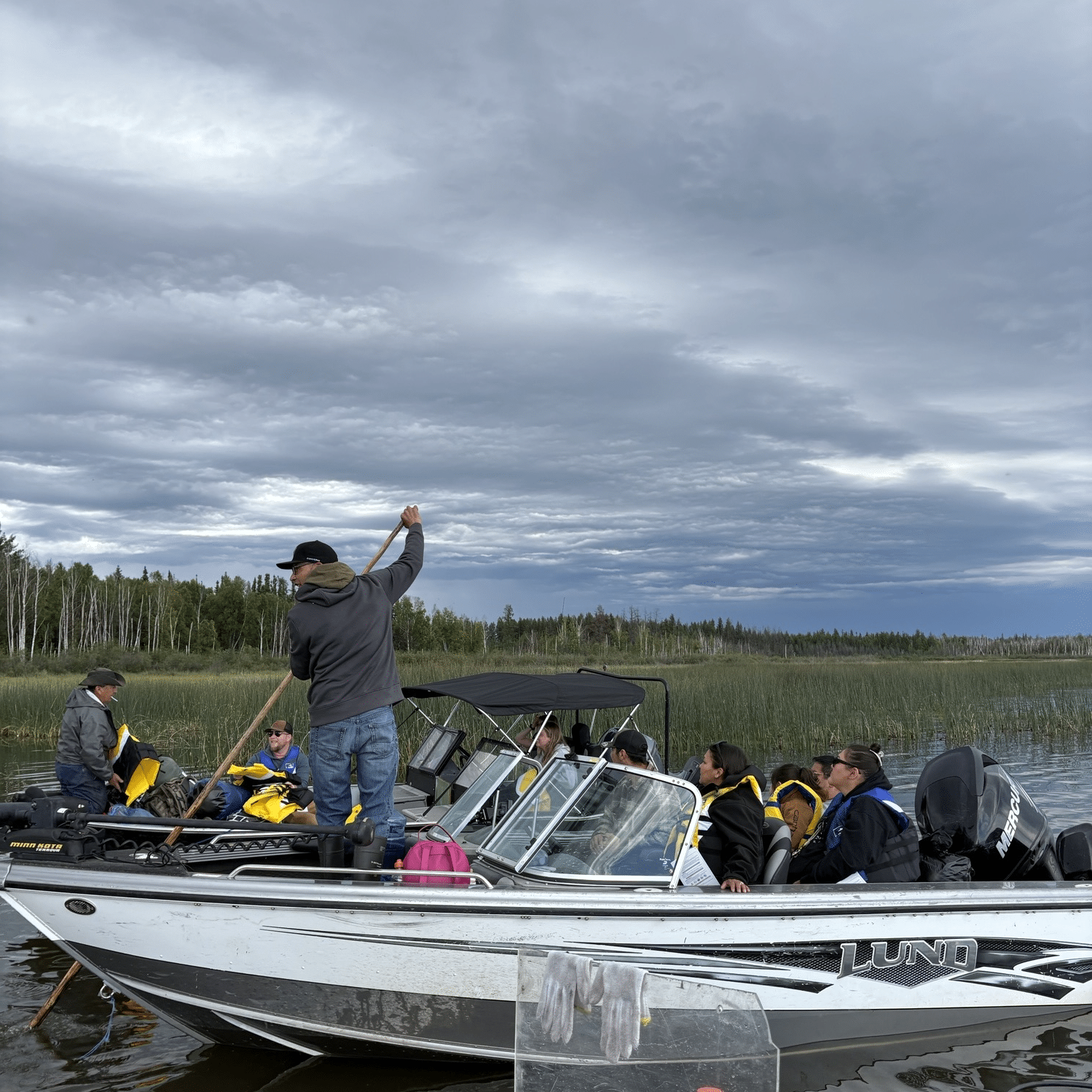
On the very first morning of the gathering, Jennifer Desjarlais (Muskowekwan First Nation mental health worker) shared a prayer with nipi (the water) and askiy (the land) before everyone woke. Having started things off in a good way, attendees spent the next four days learning, sharing meals together, and connecting over activities and stories on the land.
Elder Marie Moberly, a local teacher in Turnor Lake Birch Narrows, shared stories of growing up, and expressed how critical it is for Indigenous kin to hold knowledge about the land. Under the guidance of Ron Desjardin (educator, advisor, and Rebecca’s father), the group then learned how to make birch bark baskets. Ron showed how lengthy the process of making these baskets could be, and reminded participants of the patience that is learned through this practice. Lastly, Rebecca led a session on dry meat making and noted the importance of food sovereignty and honouring the practice of culture and tradition that runs deep through Indigenous histories.
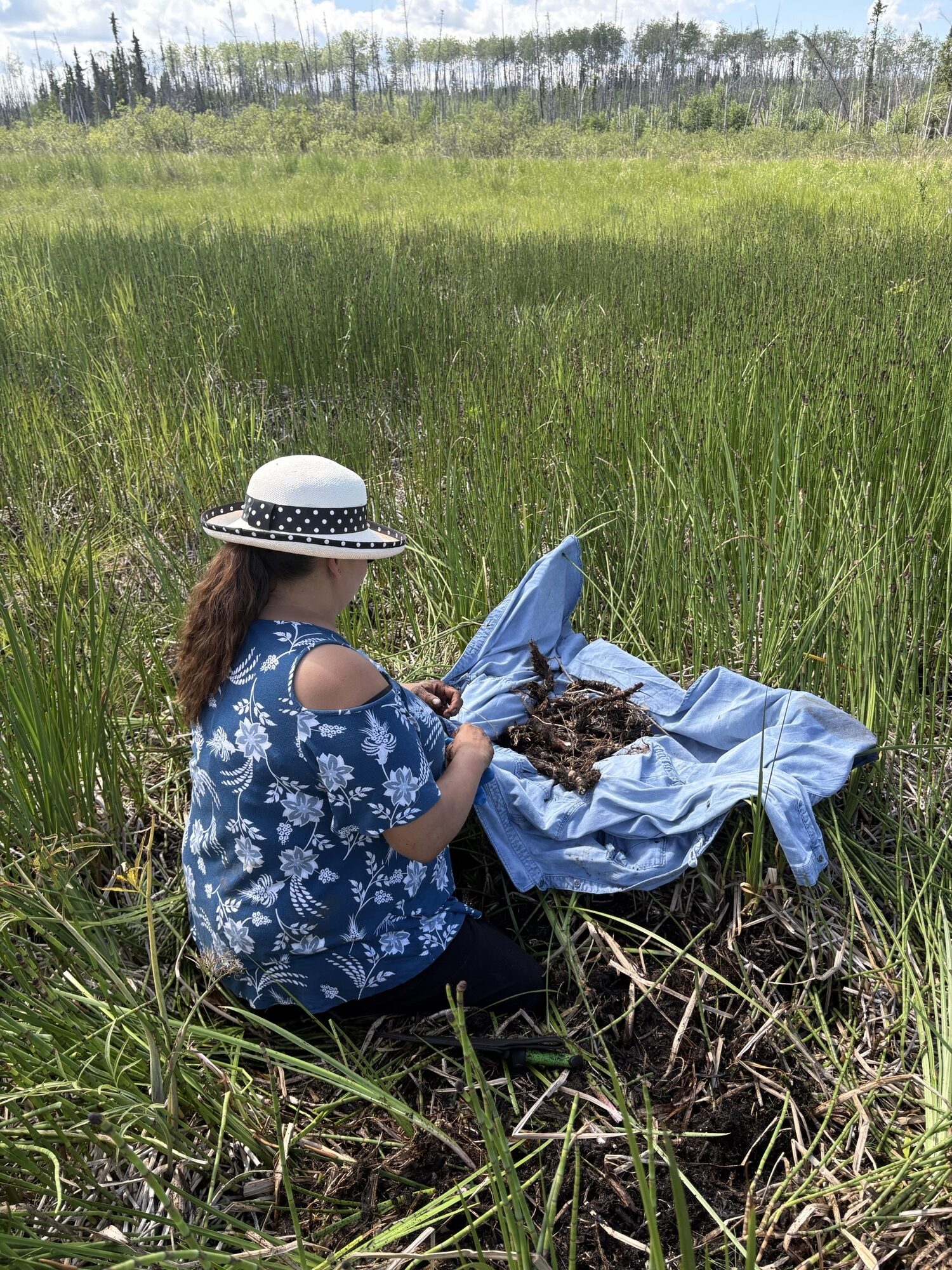
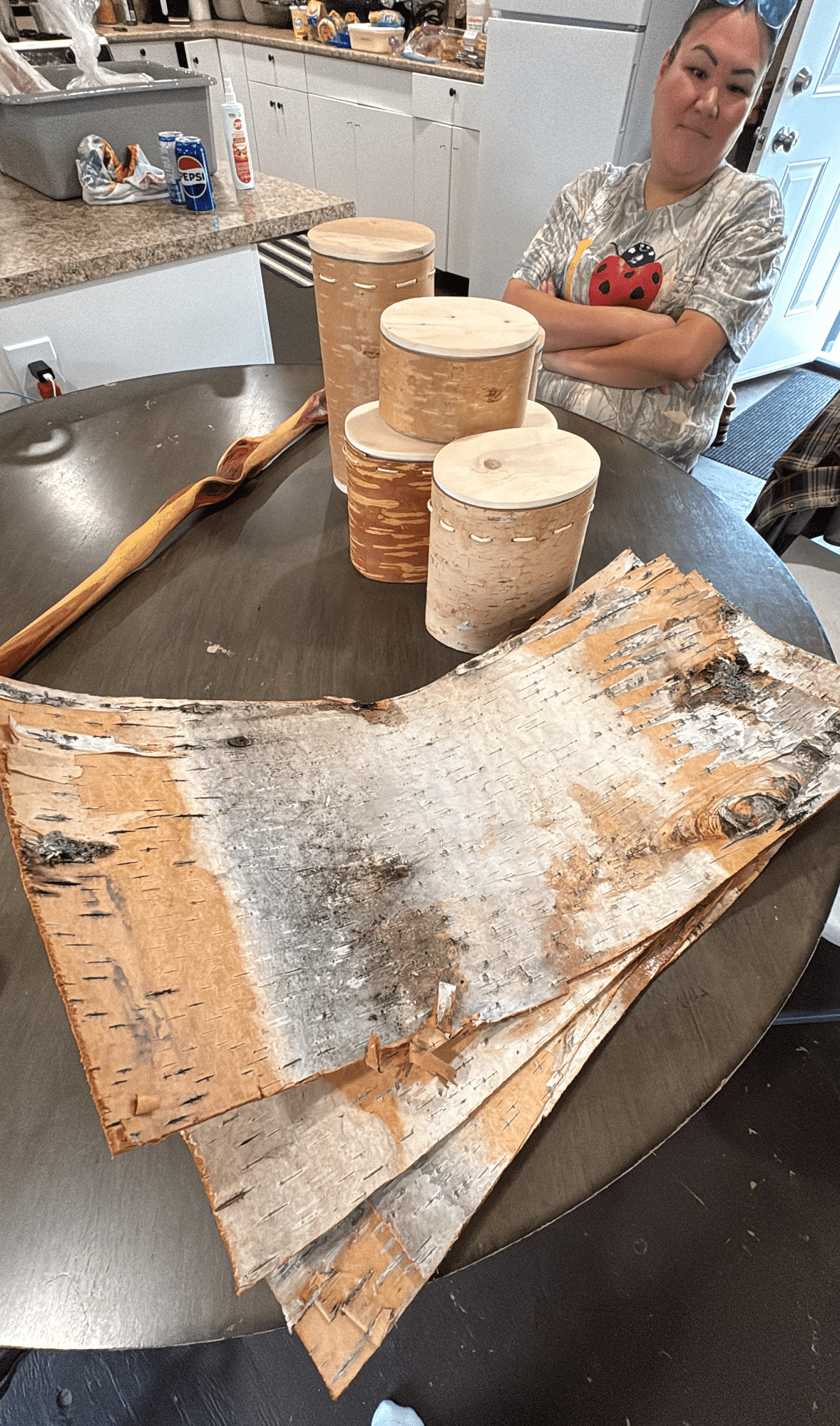
Being together allowed participants to learn from one another and share how their initiatives are growing. Juandell Windigo from Muskowekwan First Nation’s Family Wellness and Healing Centre explained how their work is carefully designed for Indigenous relatives in need of healing. Onion Lake First Nation and Pasqua First Nation both shared about their work building and growing community gardens and their goals of addressing food security, and offering a space of learning and knowledge-sharing for community members.
The Sîhtoskâtowin Program team’s biggest priorities for this time together was for partners to nurture connection and kinship, take time for rest and wellbeing, and share resources and learnings. Attendees definitely felt this intention. At the end of their time together, the group shared that spending time on the land can be a rare occurrence for many of partners living in the South and appreciated the opportunity to visit other remote regions, rich with cultural knowledge. Gathering here, on the traditional lands of the Dene Nation in Treaty 10 territory, truly opened up pathways of connection between the many communities doing this deeply important work.
MakeWay continues to support the co-creation The Sîhtoskâtowin Program by engaging community members, funders, and governments to participate. You can learn more about the program and how to support from their program video and web page.