
Are you ready for climate change impacts in your city or town? That is the question Community Resilience to Extreme Weather (CREW) wants to help people tackle. Founded in 2014, the project is responding to a need to optimize resources, raise awareness, prepare for, and respond to the effects of climate change in urban centres.
In September 2021, two years after they joined MakeWay’s Shared Platform, we spoke to Sheila Murray, Project Director, and Lidia Ferreira, Community Engagement Specialist to learn more about the project. Both of them understood that the people who would be most affected by climate impacts are the ones with the least resources. They also knew that people learn best from people like themselves, trusted community members and friends. This is still the basis of their neighbours-helping-neighbours approach. Nearly five years later, we sat down with them again to hear how climate change-related disasters continue to grow the need for community preparedness, and how the project has evolved to meet that need.
In our last conversation, you’d mentioned: “Extreme weather, as awful as it is and continues to be, offers an opportunity to open up the conversation to a wider audience.” Since then, what types of conversations have you been part of or observed? And how have these discussions changed over time?
A great deal has changed since 2021. In 2023, Canada had its most devastating fire season on record. This was followed by the sixth most destructive season in 2024. That was the year that the town of Jasper lost one third of its buildings. The last 11 years have been the hottest globally, and 2023 – 2025 have beaten the records. Many Canadians will find themselves grieving the loss of the long, glorious summers we experienced in the past.
Many of us living hundreds of kilometres from the burning forests smelled and breathed the smoke-polluted air. My first experience was in 2021 when a friend and I drove through BC to Kenora in Ontario and smoke was present most of the time. I sat drinking tea in her backyard as ashes, like snowflakes, drifted through the summer air, and settled on my black T-shirt. Canadians are worried, with concerned about climate impacts over the next five years and 79 per cent of us worried about impacts on future generations. The conversations about climate change that people often avoided in the past are now necessary if we’re going to learn how to respond.
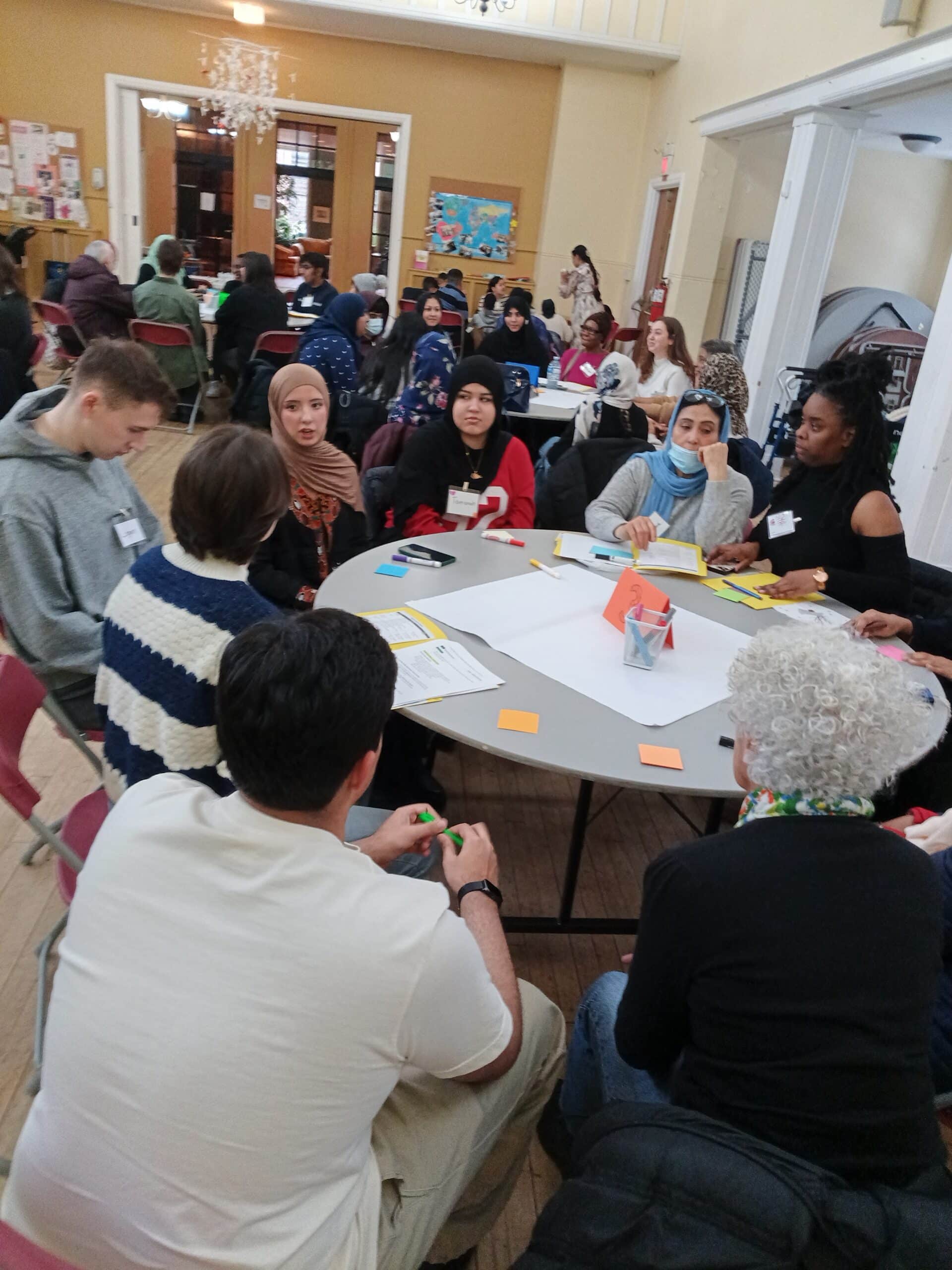
Over the years, we’ve witnessed more instances of extreme weather in Toronto and beyond. This led to the Neighbourhood Heatwave Response Project launched in 2024. Could you tell us more about this project and how it’s evolved since its since then?
The Neighbourhood Heatwave Response Project developed a Heatwave Protocol for apartment towers in Toronto’s St. James Town neighbourhood. Funded by the Commission for Environmental Cooperation, with participation from the City of Toronto, we partnered with the Toronto Environmental Alliance (TEA) and our St. James Town volunteer team. As with all our work, the Protocol was co-designed and tested by St. James Town volunteers who invited their neighbours to contribute their thoughts through surveys, facilitated conversations, and focus groups. The Protocol is a living document that encourages a tailored response for each neighbourhood apartment building. It has five focus areas to help residents through a heatwave. These emphasize:
- Communications – All residents receive notification of the heat wave.
- Homes – Residents homes are kept as cool as possible.
- Cool Areas and Cooling Stations – Residents know where these are.
- Contact System – Check in and support if needed.
- Support Services – Immediate access to local support systems.
Through this work we learned that many people living in lower income neighbourhoods either don’t have air conditioning or cannot afford to run it. During the early stages of this work, we distributed indoor thermometers along with a calendar that included tips for coping with heat. In return, we asked residents to record daytime and nighttime temperatures in their apartments. Many were shocked by the temperature readings. This matters because heat is a growing hazard. In 2021, extreme heat killed more than 600 people in British Columbia, and global temperatures get hotter just about every year.
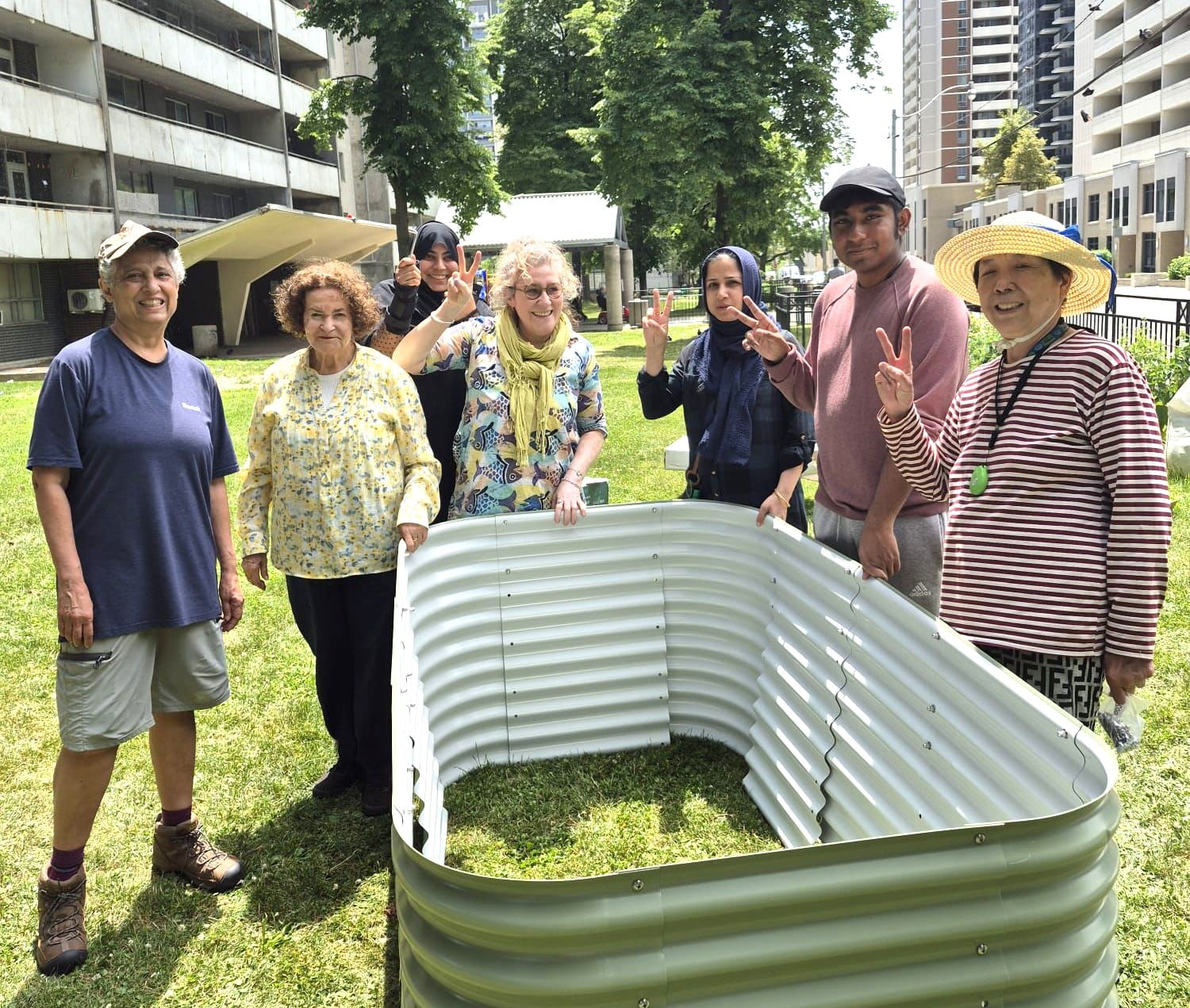
Beyond climate action, CREW’s Neighbourhood Heatwave Response Project emphasizes the importance of community as a form or protection and preparation for emergency. What are some examples where you have seen the power of community help navigate extreme weather?
Our St. James Town volunteers haven’t experienced an extreme weather event since the Protocol was published in 2024. But there have been plenty of smaller emergencies, many of which will be familiar to folk who live in older, high-rise rental neighbourhoods in the Greater Toronto and Hamilton Area. One recent serious event was a fire in a St James Town tower. CREW volunteers share a busy WhatsApp Channel and word traveled fast. Folks were quick to respond to the immediate needs of their neighbours. For instance, people had to evacuate without collecting necessary belongings. One of CREW’s volunteers gathered up head scarfs to distribute to Muslim women gathered outside who had to leave home without their hijabs.
In 2025, CREW had the honour of being invited to contribute to a gathering of First Nations and Inuit in Winnipeg. We shared the St. James Town electrical fire evacuees’ experiences with participants who’d had to evacuate their communities because of wildfires. Lidia and I learned that despite the very different circumstances, people’s fears and uncertainties are shared. What’s paramount is the compassion and support of neighbours and planning ahead.
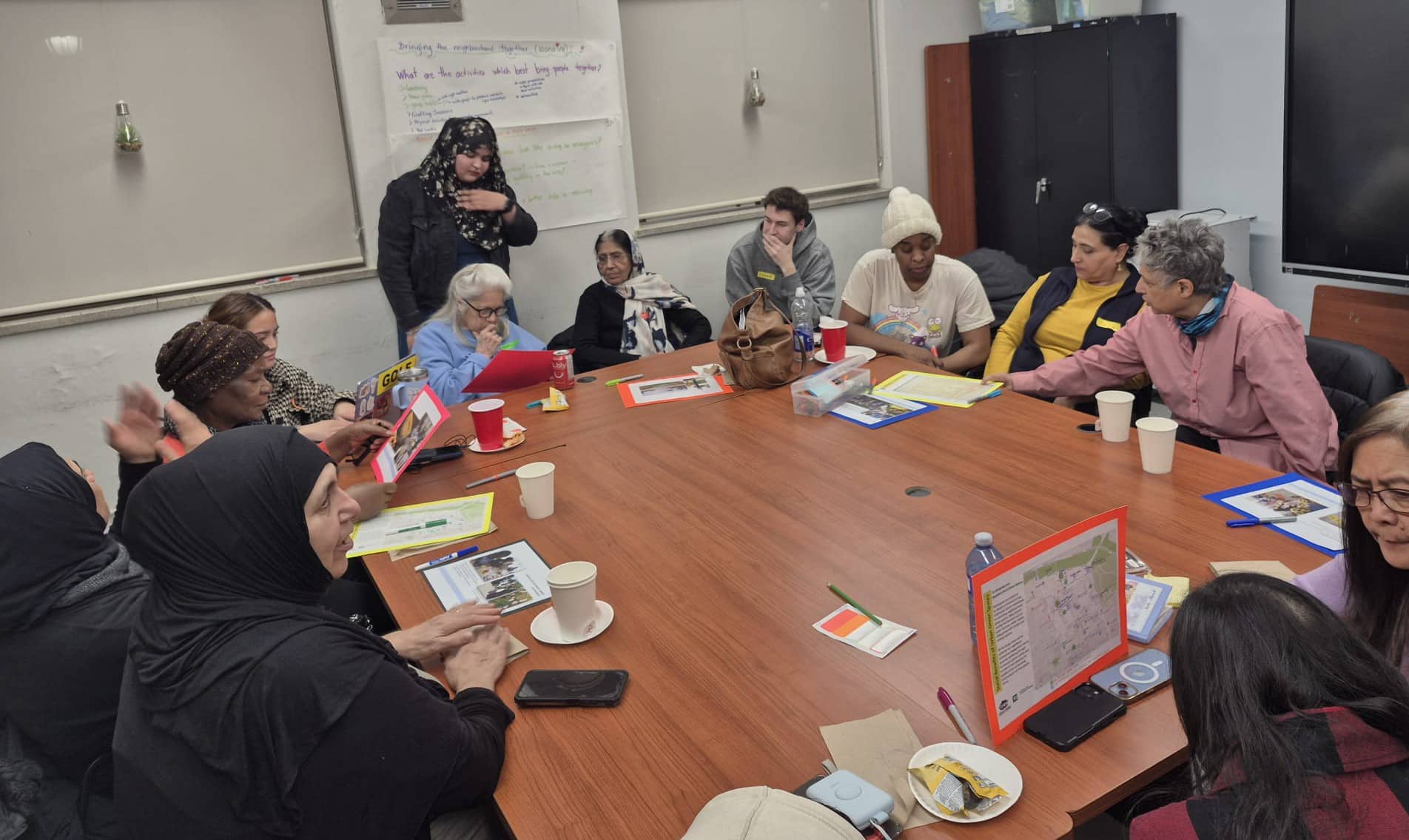
One of CREW’s early focus areas involved co-creating an extreme weather preparedness program with seniors connected to the Victoria Park Hub in Toronto. How has it expanded since then?
In 2026, CREW appears to be meeting its moment. Interest in our role-playing game, ResilientVille Canada is growing, and it will be travelling widely this year. Players experience the critical need for strong relationships when disaster strikes their neighbourhood. Increased interest may stem from recognition that our societies face many vulnerabilities, and organized official responses can’t do it all. Informed and organized neighbourhood networks can make an important contribution.
The Heatwave Protocol for St. James Town high-rise residents highlighted the special needs of seniors. In 2024 we started the Heat Resilient Seniors project to expand our heatwave education to a greater number of seniors who were encouraged to share their new heat knowledge with their own neighbours. They were empowered to form new friendships, and to join a robust social network of seniors in their neighbourhood, many of whom are active in other CREW projects. Seniors are taking mentorship and leadership roles as they help other seniors navigate local challenges.
We know that Canadian societies are experiencing increasing social isolation, loneliness and deteriorating mental health. CREW’s connection-building methods and strategies have a host of accompanying benefits. Designed to facilitate new friendships and trust among neighbours, they can be an antidote to isolation and loneliness, while also delivering a sense of purpose. We need each other!
Every now and then, Lidia and I revisit the messaging on CREW’s first postcard handout. We’re still convinced that the questions which came from our work in Victoria Park are as relevant now as they were then. I’ll finish by asking you the same five questions:
-
WHAT DID YOU DO in the last weather emergency?
-
WHAT WILL YOU DO if it’s much worse next time?
-
WHO CAN YOU CALL if you need help?
-
WHO ARE YOU GOING TO HELP?
-
WHO CAN WORK WITH YOU to help others in your neighbourhood?
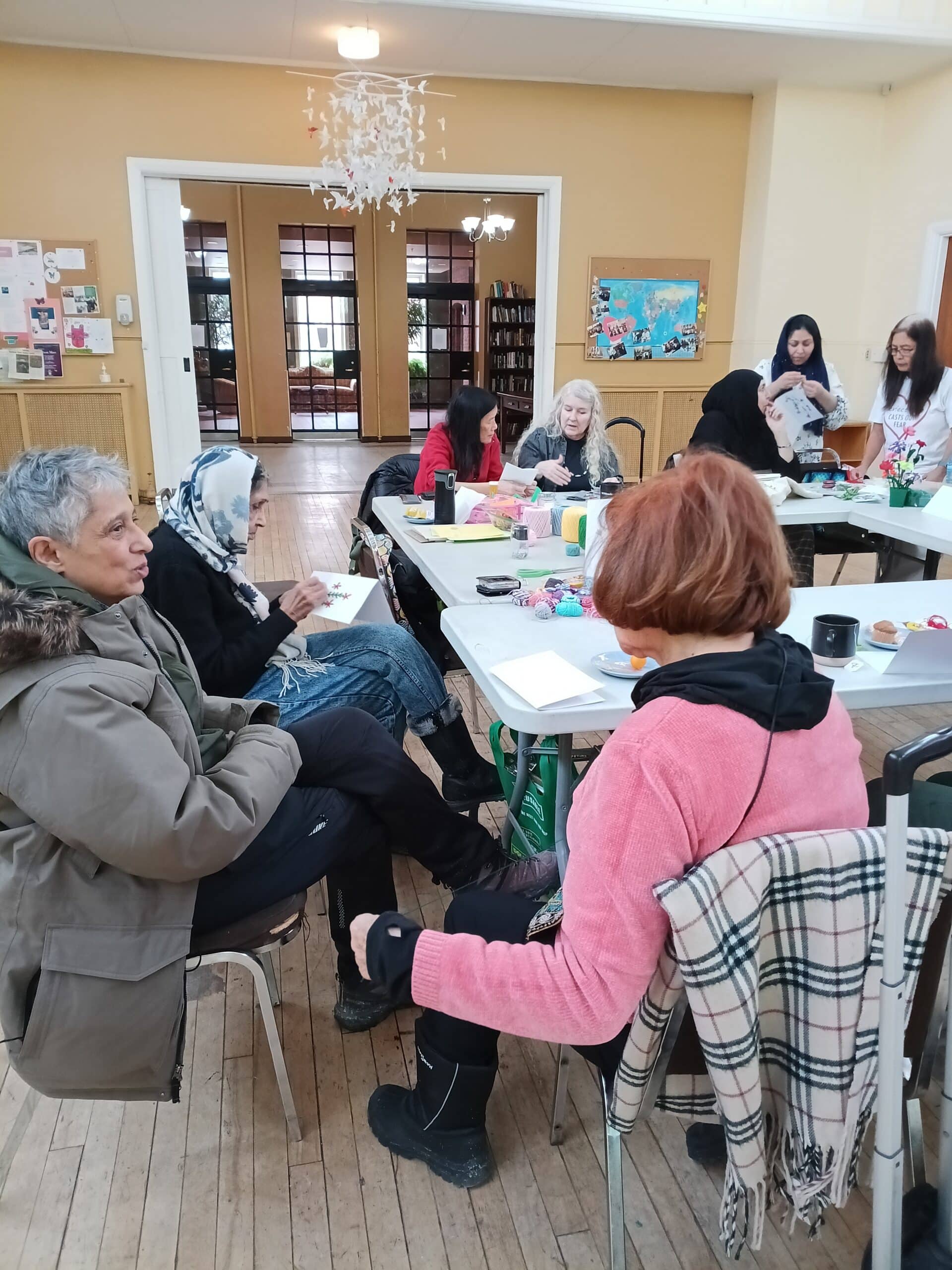
CREW is a project on the Shared Platform that helps communities in Toronto understand local climate impacts and build resilience together. It supports neighbourhood networks that strengthen preparedness, especially for vulnerable residents. Donations to support CREW’s work can be made through our website.